
Last updated on March 7th, 2026 at 04:21 pm
Apple – Spotify – YouTube – Amazon
What a podcast producer does for business owners
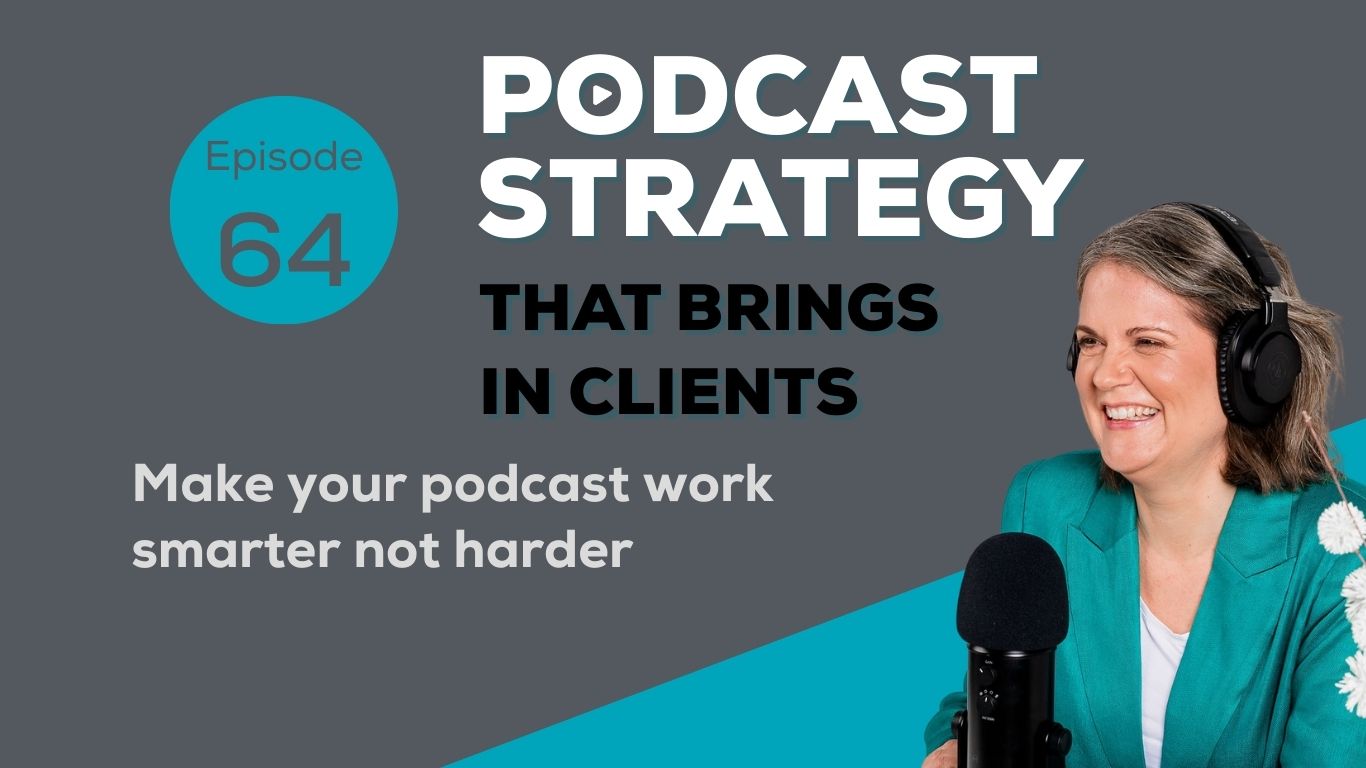
Have you ever thought, “I just need someone to edit my podcast”? This is one of the most common assumptions I hear from business owners, and it’s exactly why I recorded Episode 64 of the podcast. There’s a lot of confusion around what podcast support looks like, and many people don’t realise just how much impact the right kind of support can have on their business and their sanity.
In this post, I walk you through what a podcast producer really does, how that role goes far beyond editing, and why having proper backend support can completely change how your podcast fits into your business. If your podcast currently feels time-consuming, messy, or disconnected from your offers, this will help you understand why.
Why podcast production matters for business growth in 2026
Your podcast is not just another piece of content to tick off your list. It’s a long-term asset that builds trust, credibility, and connection with your audience, often faster than any other platform. In 2026, podcasting is more competitive than ever, but it’s also more powerful for business owners who use it strategically.
This matters because most business owners don’t want a podcast “just because.” They want a podcast that supports their visibility, leads people into their world, and reinforces what they’re known for. Without clear production and strategy, it’s easy to spend hours recording episodes that feel good but don’t move your business forward.
Why doing your podcast alone feels overwhelming and messy
Many podcasters start out doing everything themselves. At first, it feels manageable, but over time the cracks begin to show. You’re recording episodes, editing when you can, rushing show notes, and trying to remember to promote each episode across multiple platforms.
Often, bits and pieces get handed to a VA, but there’s still no one overseeing the full process. This is usually when podcasting starts to feel chaotic and draining. The issue isn’t lack of commitment or motivation, it’s the absence of structure and a clear plan for how everything fits together.
The difference between a podcast editor and a podcast producer
A podcast editor focuses on the technical task of editing and uploading your episodes. A podcast producer, on the other hand, looks at the bigger picture and focuses on outcomes. Editing is important, but it’s only one part of what makes a podcast successful.
A producer looks at your podcast in the context of your business goals, your audience, and your long-term vision. That includes helping you make decisions about format, episode direction, and what will serve your listeners. In the episode, I shared a client example where we chose to stick with audio rather than video after reviewing listener data. That single decision saved time and money, reduced pressure, and helped her batch an entire season efficiently.
How a podcast producer supports your business strategy
Podcast production should always start with strategy. Before thinking about episode ideas, a producer looks at what you’re working towards in your business, what you’re promoting, and what your audience needs to hear to be ready to take the next step.
This stops your podcast from feeling random or disconnected. Each episode has a purpose, whether that’s building trust, educating your audience, or supporting a specific offer. This is also where your podcast begins to work alongside your other platforms, like your email list and blog, instead of operating in isolation.
What happens when your podcast is managed properly
When your podcast is managed properly, everything feels calmer and more intentional. You know what you’re recording and why, episodes go out on time, and nothing feels last minute. Behind the scenes, there are clear workflows, content calendars, and timelines that keep things moving without constant reminders.
For many clients, this is the biggest relief. Their podcast stops living on their mental to-do list and starts running smoothly in the background, with someone keeping an eye on the details.
How strategic podcast production saves time and builds consistency
Consistency doesn’t come from pushing harder or trying to be more disciplined. It comes from having systems that support you. Batch recording, grouping admin tasks, and planning content around your offers saves enormous amounts of time and energy.
Instead of switching between tasks every week, you work in focused blocks. This also makes it easier to repurpose content, so one podcast episode can become a blog post, a newsletter, and multiple social posts without creating everything from scratch.
Why podcast strategy matters more than ever right now
Listeners today are selective about what they give their time to. They want clarity, relevance, and value, and they want to understand quickly whether a podcast is for them. If your podcast doesn’t clearly connect to your message or your offers, people may enjoy listening but never take action.
That’s why strategy matters now, not later. Whether you’re planning a podcast or already publishing episodes, getting clear on your structure and goals makes everything else easier. If you’re still in the planning phase, the Podcast Launch Roadmap helps you make those decisions before you hit record and avoid common mistakes that slow growth.
How your podcast can generate leads not just downloads
Downloads are great, but they’re not the end goal for most business owners. A well-produced podcast gently guides listeners towards the next step, whether that’s joining your email list, downloading a free resource, or working with you.
This is where lead magnets play a key role. Talking naturally about a helpful resource within your episodes creates a bridge between listening and taking action. If podcast guesting is part of your strategy, having a clear pitch matters too. The Podcast Guest Pitch Template helps you reach out with confidence and get booked on the right shows without overthinking every email.
What a podcast producer handles behind the scenes
Behind the scenes, a podcast producer is part strategist, part organiser, and part editor. They manage workflows, handle editing and publishing, support content repurposing, and keep an eye on what’s working so decisions can be made using real data rather than guessing.
Most importantly, this allows you to stay in your zone of genius. You get to focus on sharing ideas, having conversations, and showing up for your audience, while everything else is taken care of.
How to use your podcast as the backbone of your content
Your podcast doesn’t need to live in one place. Each episode can be repurposed into a blog post, an email, social media content, and even Pinterest pins that continue driving traffic long after release. This is how podcasting creates evergreen content that supports your business consistently over time.
This blog post itself is an example of that process, taking one episode and turning it into long-form, searchable content.
How to think like a podcast producer before you outsource
Even if you’re not ready to outsource yet, you can start thinking like a producer. Planning episodes around your offers, batching your recording sessions, and creating simple repeatable workflows will make podcasting feel more manageable.
Doing this now also sets you up beautifully for support later, because your podcast already has structure.
Simple podcast systems that make consistency easier
You don’t need complicated tools or elaborate processes to stay consistent. Simple systems, like a basic content plan and a clear recording schedule, often make the biggest difference. Structure reduces stress and helps your podcast stay visible without feeling overwhelming.
When to hire a podcast producer for your business
If your podcast feels like hard work, is inconsistent, or disconnected from your goals, it’s usually a sign that you need support. Hiring a podcast producer isn’t about doing less or giving up control. It’s about making smarter decisions and allowing your podcast to support your business properly.
How to get strategic support with your podcast
If you want a podcast that sounds professional, stays consistent, and supports your business without taking over your time, this is exactly what I help with. Whether you’re launching a new show or refining an existing one, we can create a setup that works for you and your goals.
If you’re ready to stop guessing and start using your podcast more intentionally, I’d love to support you. Let’s chat!
Resources and links mentioned in this episode:
- Podcast Management Packages
- Subscribe to our weekly newsletter
- Connect with me on Instagram
- Connect with me on Facebook
- Connect with me on LinkedIn
- Podcast Launch Program
- FREE Podcast Launch Roadmap
About Podcast Strategy That Brings in Client
Want your podcast to work harder for your business?
Podcast Strategy That Brings in Clients shows you how to turn your podcast into the backbone of your marketing: attracting leads, building trust, and getting more from each episode (without spending all day creating content).
Hosted by podcast producer Laura McRae, this show helps you get your podcast working harder, so every episode becomes content that reaches more people, builds trust, and brings in new clients.
As a content marketer and podcast expert Laura shares what works, what doesn’t, and how to stop wasting time on the wrong things.
Each week, you’ll get practical advice and podcast strategy to help you stay consistent, create content with purpose, and use your podcast to grow your business and be seen.
If you’re ready for your podcast to pull its weight, this is the show for you.
Smart content starts with your podcast, but it doesn’t end there.
Transcript
This transcript was created using Headliner. It has been copied and pasted but not proofread or edited, so it may contain errors or inaccuracies.
A podcast manager or producer helps manage and improve your podcast
Laura: Hello,
Laura: Hello, and, um, welcome back to the podcast. Today I want to talk about something that comes up a lot in conversations I have with business owners, and that’s what, uh, a podcast manager or producer does. There’s often a bit of confusion around this because a lot of people think that podcast support is just editing. And while editing is definitely part of it, it’s only a small part. I also wanted to do this episode because many of you tell me that you’re doing most of your podcast yourself or you’ve passed bits and pieces onto a va, but it’s still feeling messy and time consuming. So my hope today is that this gives you a clearer picture of what’s possible when you have the right support at the back end of your podcast.
Laura McRae is a podcast producer and content strategist
Welcome to Podcast strategy that brings in clients. I’m Your host, Laura McRae, podcast producer and content strategist. If you want your podcast to bring in leads, build trust, and support your business, you’re in the right place. Because smart content starts with your podcast, but it doesn’t stop there. Let’s talk about the difference between an editor and a podcast producer. If someone is purely editing and uploading your audio, that can still be really helpful, but it’s different to having someone manage your whole podcast for you. The way I see it, a, uh, podcast producer isn’t just thinking about the file you send them. They’re thinking about your show in context of your business, your goals, and your audience. They’re looking at the bigger picture. They’re thinking, how does this podcast fit into the business you’re building? What are you trying to be known for? And how can your podcast support that consistently and sustainably? I had a client who came to me convinced that video podcasting was the right move, because that’s what everyone online was talking about. She recorded season one in audio only, then switched to video for season two. But when we looked at, uh, her podcast stats together, it became clear that most of her audience were listening and not watching. That’s why having a producer, not just an editor, really made the difference. Instead of pushing ahead with video just because it was trendy, we made a strategic decision based on her audience and her goals for season three. She batch recorded 20 audio episodes in just four weeks. I handled the editing, show notes, uploads, and scheduling. So she ended up with five months of episodes ready to go. She trusted me completely and simply focused on recording. And that’s really the heart of what a good podcast producer does. It’s not just doing the task for you. It’s about helping you make smarter decisions, save time and build a show that works for your business.
I help you shape your podcast episodes so they support your visibility and goals
Let me walk you through what that looks like in real life with my clients. Where we usually start is with strategy. Before we even talk about episode ideas, we look at your business as a whole. We talk about what you’re promoting, what you’re working towards and what you want to be known for. From there, I help you shape your episodes so they support your visibility and your goals, instead of just recording whatever feels good in the moment. A good example of this is one of my clients. She already had a podcast with listeners all around the world. On, um, paper. Everything looked great, but she was missing a big opportunity. She knew that if she sent a regular email to her audience, she could sell more tickets to her events. The problem was she didn’t even have a proper email list set up and she didn’t have a lead magnet to grow it. So I helped her think through what would be useful for her audience and together we came up with an idea for a lead magnet. Then I went a step further and set up her email marketing platform, connected everything properly and got her existing subscribers organised in one place. Now she talks about her lead magnet, naturally, in her, uh, podcast episodes. Her email list has grown consistently and she’s not just relying on her podcast. She has her, uh, podcast and email working together for her business. This is a really important part of how I work. I don’t just look at your podcast in isolation. Your podcast is often a brilliant starting point, but most people are much more likely to buy from you once they’re on your email list. So my job is to help you connect those dots in a way that supports your business. Uh, a big part of my role is also organisation and systems. I keep everything running smoothly behind the scenes content, calendars, timelines, deadlines and clear workflow. So nothing feels last minute or chaotic. Most of my clients tell me this is one of the biggest reliefs. I’ve lost count of how many times people have said that if it wasn’t for me gently keeping them on track, their podcast would simply fall off the radar. And once everything is organised
00:05:00
and moving, that’s when the production side comes in. Yes, I do edit your episodes. I tidy up the audio, remove long pauses and all the hiccups that go with live recording. I make sure your show sounds professional while still sounding like you. Then I handle the publishing across platforms with clear titles and show notes so your podcast can be found. But I don’t stop there. This is also where your podcast really starts to work. Harder for you. From one episode, I help you turn that content into social posts, newsletters, um, and blog posts. So your podcast doesn’t just live in one place. Instead, it becomes the backbone of all your content for this very podcast. That’s exactly what I do. Each episode becomes a newsletter, a blog post, a and at least three social media posts. And more recently, I’ve started connecting my podcast and blog post content on Pinterest. So the episodes continue to be discovered long after they’ve gone live. And it’s not just about creating more content. I also pay attention to what’s landing. Every so often we look at your stats. I, uh, keep an eye on what’s working, notice patterns and help you make decisions based on real data rather than guesses or gut feelings. So in practise, I end up wearing a few different hats. I’m, um, your strategist, your organiser, editor and content support, depending on what your show needs at any given time. But my main goal is always the same. To make your podcast feel easier, more consistent and something you’re proud to share. The most important part of all this isn’t just to save you time, although that’s definitely a big win. What really matters is that you get to stay in your zone of genius. You get to focus on what you’re good at, and that’s having meaningful conversations, sharing your ideas and showing up for your audience. And I’ve got you covered for everything else. You don’t have to chase deadlines, you don’t have to troubleshoot tech issues. You don’t have to stress about whether your titles are doing their job or whether or if you’ve uploaded things correctly. A, uh, lot of my clients tell me that the biggest change for them isn’t just the time they get back. It’s the sense of relief that comes with knowing that their podcast is being looked after instead of sitting on their to do list or lingering in the back of their mind. I really relate to that because I felt exactly the same when I handed over my bookkeeping to a bookkeeper. I do actually have a Cert IV in bookkeeping, so I could do it, but I hated it. I used to set a weekly reminder to stay on top of it. Then I’d just keep snoozing it and by the end of the quarter, I’d be stuck spending a whole day doing my tax reconciling, feeling stressed and frustrated with myself. Now I know someone is taking care of it and doing a better job than I ever could. And it’s such a weight off my shoulders. That’s very similar to how it feels for my clients when they hand their podcast backend over to me. If you’re not quite ready to bring in help yet, here are a few simple ways you can start thinking more like a podcast producer. First, create a content plan that aligns with your offers. Your podcast doesn’t need to be random. Try mapping out your next four to six episodes around what you’re currently selling or promoting and what your audience needs to hear before they’re ready to say yes. Second page Batch your workflow. Instead of jumping between tasks every week, group similar things together. Record a few episodes in one go, then write all your show notes in one session. Then schedule your uploads together. It saves energy and makes consistency so much easier. When you structure your podcast like this, you’ll feel the difference straight away and you’ll be much better prepared if and when you decide to hand the back end over. If you’re a business owner who wants a professional quality podcast and you want to use it strategically in your business, not just record it and hope for the best, my podcast management packages might be a good fit for you. I work with people who want their podcast to sound polished, stay consistent and support their business without it taking over their time. Find out the details on my website@, uh, podcastsupportservices.com I’ll put a link in the show notes where you can read more about the packages and ah, see if it’s the right fit for you.
I’m taking a short pause from the podcast for a few weeks
And just before we wrap up, a little heads up that I’m going to be taking a short pause from the podcast for a few weeks. I live in Australia and obviously you can tell by my accent. I’m from the UK and I’ve got family visiting from the uk so I want to take some time to spend with them. I’m also looking at restructuring a few things in my business, so I need to create space for that too. So as much as I talk about consistency being important, I also really believe that your podcast shouldn’t run your life. If you need a bit of breathing room, it’s okay to take a break. Your show will still be there when you’re ready to
00:10:00
come back. So I’ll be back soon and I can’t wait to share what’s next. Thanks so much for listening and I’ll catch you in the next episode. This episode is brought to you by Podcast Support Services. Podcast strategy that attracts leads, clients, and credibility Are you looking for a podcast producer? We may have availability head to podcastsupportservices.com.
00:10:24
Subscribe to The Long Game
Simple, strategic podcasting advice for business owners who want their show to work with their business.
Get weekly tips, ideas, and real-world support to help you stay consistent, feel confident, and grow a podcast that brings in clients.
No spam. No pressure. Unsubscribe any time.